Mittwoch, 12. Oktober 2022

Today 20 years ago...The Rodrigues Regional Assembly

Manchmal findet man Sachen, mit denen man gar nicht gerechnet hat..., ist zwar schon 20 Jahre her, aber passt dennoch gerade heute, denke ich...

Sometimes you find things you never expected..., although already 20 years ago, still appropriate for today, at least I think so.

 12 October 2002: Autonomy of Rodrigues Regional Assembly, Swearing in ceremony, special cover source 

Zur Erinnerung an die Autonomie der Regionalversammlung von Rodrigues brachte die Philatelistische Gesellschaft von Mauritius einen Sonder- Ersttagsbrief mit Stempel vom 12.10.2002 heraus. Dieses Ereignis war ein wichtiger politischer Meilenstein für die Insel Rodrigues, die zur Republik Mauritius gehört.

Das Gesetz zur Einrichtung der Regionalversammlung von Rodrigues wurde am 20. November 2001 einstimmig verabschiedet, wodurch Rodrigues den Status einer autonomen Insel erhielt. Die ersten Kommunalwahlen zur Bildung einer Regionalregierung fanden am 29. September 2002 statt. Die Vereidigungszeremonie wurde am 12. Oktober 2002 abgehalten. Dieser Ersttagsbrief erinnert an diese Zeremonie.

To commemorate the autonomy of the Rodrigues Regional Assembly, the Philatelic Society of Mauritius issued a special first-day cover postmarked October 12, 2002. This event was an important political milestone for the island of Rodrigues, which belongs to the Republic of Mauritius.

The Rodrigues Regional Assembly Bill was voted unanimously on 20 November 2001 where Rodrigues was given the status of an autonomous island. The first local elections were held on 29 September 2002 to put in place a local government. A swearing-in ceremony was held on 12 October 2002. This cover marks the swearing-in ceremony.


Here the Rodrigues Regional Assembly building (source) in Port Mathurin


Photo source 

Selbstverständlich gibt es zum heutigen runden Geburtstag ein Monument, zwar nicht am Gebäude der RRA aber an der Administration.

And today a monument to commemorate this big 20th anniversary was unveiled by Chief Commissioner Johnson Roussety, Deputy Chief Commissioner Franceau Aubret Grandcourt, in the presence of the Commissioner for Arts, Culture & Ors Joseph Varok Ravina...

 Happy Birthday, Rodrigues, even if you are older than 20 years...!

 Source

 - Mauritius Philatelic Corner/Stamps of Mauritius 2000-2009

 - Rodrigues wird volljährig...Garden Party at "Rodrigues Friendly"...18 ans de l'Autonomie/04.10.2020

- Sur la route de l'Autonomie....13 Jahre Autonomie in Rodrigues....On the road to Autonomy/13.10.2015

- Rodrigues...10 Years Autonomy/17.10.2012 

- Autonomy Celebration 2008/25.10.2008 

Samstag, 18. Juni 2022

Mit Herz und Maske...Happy Birthday, Dirk!


Für das Herz auf dem Kuchen gibt es Gründe, viele um genau zu sein... 

Und für die Maske auch...


There are reasons for the heart on the cake, many to be precise...

And for the mask too...


Und mindestens genauso viele Gründe gibt es dankbar zu sein, speziell heute.

And there are at least as many reasons to be grateful, especially today.


Note, the Covid Death figure stands at 0 because people who died were not counted due to comorbidities....


Nein, wir hatten bislang beide kein Covid-19, aber viele um uns herum.

No, we haven't had Covid-19 so far but many around us. 


Happy Birthday, Dirk! 


Related:

 Tatort 18.Juni....Happy Birthday, Dirk!/18.06.2019

- Hühnersuppen helfen immer...Ein Debakel-WM Auftakt und ein Geburtstag...Happy Birthday, Dirk!/18.06.2018

- Bärengeburtstag...Bear Birthday...Anniversaire d'Ours/18.06.2015

 - Geburtstagskuchen 2014 ...- Birthday Cake 2014/18.06.2014

- Zwei Geburtstage, eine seltene Krankheit und warum Blutspenden so wichtig ist...Happy Birthday, Elonie & Dirk!/18.06.2011 

Montag, 6. Juni 2022

Eine Fundsache und doch nochmal was zum Transit der Venus...A find and the Transit of Venus Reloaded...


Ein Venustransit ist ein seltenes astronomisches Ereignis, bei dem der Planet Venus exakt zwischen der Erde und der Sonne hindurchzieht. Seit dem Jahr 1761 hat dieses Schauspiel nur fünfmal stattgefunden. Es tritt in Paaren im Abstand von acht Jahren auf, gefolgt von einer Pause von über einem Jahrhundert 

A transit of Venus is a rare astronomical event in which the planet Venus passes directly between the Earth and the Sun. Since 1761, this spectacle has occurred only five times. It happens in pairs eight years apart, followed by a gap of over a century.

Die Daten aller Transite seit 1761 - The dates of all transits since 1761:

  • 6 June 1761 
  • 3 June 1769
  • 9 December 1874
  • 6 December 1882
  • 8 June 2004 
  • 5/6 June 2012 

Ich habe bereits einiges zum Transit der Venus hier in meinem Blog gepostet, das meiste bezog sich auf Pingré's Mission in Rodrigues im Jahr 1761, und ziemlich viel auch zum Transit-Ereignis im Jahr 2012.Wenig bis gar nichts bislang zu den Transit-Ereignissen dazwischen, woran mich diese Fundsache erinnerte, ein Ersttagsbrief aus dem Jahr 2004...

I've already posted quite a bit about the transit of Venus here on my blog, most of it relating to Pingré's mission to Rodrigues in 1761, and quite a bit about the transit event in 2012 as well. Little to nothing so far about the transit events in between, which this find reminded me of – a special first-day cover from 2004...

 8 June 2004: Transit de Venus – Ile Maurice et Rodrigues

Source: Mauritius Philatelic Corner/Stamps of Mauritius 2000-2009

"Dieser Gedenkumschlag wurde anlässlich des Venustransits herausgegeben, einem astronomischen Ereignis, bei dem die Venus die Umlaufbahn von Sonne und Erde kreuzt. Er findet alle 122 Jahre paarweise statt, mit einem Abstand von acht Jahren zwischen den Durchgängen. Der letzte Zyklus ereignete sich 1874 und 1882.

Der Umschlag zeigt eine allegorische Darstellung des Venustransits. Für diesen Gedenkumschlag wurden drei Briefmarken der Sternbild-Serie verwendet. Sie zeigen die markantesten Sternbilder, die im Südwinter sichtbar sind.

Der Umschlag wurde in Port-Mathurin, Rodrigues, mit einem Sonderstempel frankiert, der Pointe Venus zeigt, wo in der Vergangenheit Venustransite beobachtet wurden."

"This commemorative enveloppe was issued to mark the Transit of Venus, an astronomical event, in which Venus crosses the path the sun’s and the earth’s orbit. It occurs in pairs every 122 years with an interval of 8 years between each passage. The last cycle was in 1874 and 1882.

The cover depicts an allegoric representation of the Transit. Three stamps, from the Constellation issue were used for this commemorative cover. They are the most prominent constellations observed during the austral winter.

The enveloppe was franked at Port-Mathurin, Rodrigues, with a special cachet showing Pointe Venus where Transit observations were made in the past."

Hier nochmal eine zusammenfassende Rückschau - Here's a summary review


Abbé Guy Pingré

Der Transit der Venus, beobachtet vom französischen Astronomen Abbé Guy Pingré auf der Insel Rodrigues, fand am 6. Juni 1761 statt, als die Venus als winziger schwarzer Punkt direkt vor der Sonne vorbeizog. Abbé Pingré und sein Team wurden von der Académie des Sciences entsandt, um dieses historische Ereignis von Rodrigues aus zu beobachten. Daher ist der Ort, an dem er seine Instrumente aufstellte, noch heute als Pointe Vénus bekannt. Astronomen aus aller Welt versammelten sich an über 60 Standorten der Erde, um dieses Ereignis zu verfolgen und die Entfernung zwischen Erde und Sonne, die als Astronomische Einheit (AE) bezeichnet wird, zu berechnen. Da das Wetter ungünstig war, waren Pingrés Beobachtungen historisch weniger bedeutsam wegen der Kartierung der Venusbahn vor der Sonne, sondern vielmehr, weil sie einige der frühesten Aufzeichnungen über die einzigartige Flora und Fauna der Insel lieferten, die er während seines Aufenthalts observierte.

The transit of Venus observed by the French astronomer Abbé Guy Pingré on Rodrigues Island took place exactly on June 6, 1761when the planet Venus passed as a tiny black dot directly in front of the Sun. Abbé Pingré and his team were sent by the Académie des Sciences to observe this historic event from Rodrigues Island. Because of this, the location where he set up his instruments is still known today as Pointe Vénus. Remember? Astronomers from all over the world gathered at over 60 sites to track this event to calculate the distance between the Earth and the Sun, which is known as one astronomical unit. As the weather was not favourable, Pingré’s observations were historically less significant for mapping out the tiny planet's path across the Sun but more for providing some of the earliest notes on the island's unique flora and fauna which he observed during his stay.


 1874 - Rodrigues

Beim nächsten Venustransit am 9. Dezember 1874 waren Astronomen diesmal auf Rodrigues sowie auf sowohl auf Mauritius vertreten.Wieder unternahmen wissenschaftliche Teams während des Transits weltweit massive Anstrengungen, um die Entfernung zur Sonne neu zu berechnen. Die beiden Inseln spielten dabei eine zentrale Rolle.

Eine offizielle, hochgradig ausgerüstete britische Expedition unter der Leitung von Lieutenant Neate war auf Rodrigues. Sie bauten Stationen an Orten wie Point Venus und Pt. Coton auf. Im Gegensatz zu früheren Versuchen hatten die Forscher auf Rodrigues im Jahr 1874 hervorragendes, klares Wetter und konnten den Transit perfekt dokumentieren.

Zusatzforschung: Die Expedition wurde von Naturforschern wie Henry Slater begleitet, die die Wartezeit nutzten, um in den Kalksteinhöhlen von Plaine Corail nach Skeletten ausgestorbener Tierarten, wie dem Rodrigues-Solitär, zu graben.

During the next transit of Venus on December 9, 1874, astronomers were present on Rodrigues Island as well as on Mauritius. Once again, scientific teams worldwide undertook massive efforts during the transit to recalculate the distance to the sun. The two islands played a central role in this endeavor.

An official, highly equipped British expedition led by Lieutenant Neate was on Rodrigues. They established stations at locations such as Point Venus and Point Coton. Unlike previous attempts, the researchers on Rodrigues in 1874 enjoyed excellent, clear weather and were able to perfectly document the transit.

Additional research: The expedition was accompanied by naturalists such as Henry Slater, who used the waiting time to excavate the limestone caves of Plaine Corail in search of skeletons of extinct animal species, such as the Rodrigues solitaire.


Site diagram of Belmont/Mauritius showing the heliometer room (A), photo room (B), transit room (C), double image micrometer location (D), 4-inch telescope room (E), alt-azimuth room (P), stone pillar with heliotrope (F), and 3-inch telescope location (Y), and miscellaneous stone pillars (Z).  

Lynn Palmer photo

Auf Mauritius befand sich hingegen auf privatfinanzierter Luxus-Expedition der wohlhabende britische Astronom Lord Lindsay (James Ludovic Lindsay). Zu seinem hochkarätigen Team gehörte auch der berühmte Astronom David Gill. Lindsay errichtete seine private Sternwarte in Belmont (in der Nähe von Goodlands). Am Tag des Transits gab es auf Mauritius leider einige störende Wolken.

Weil das Wetter beim Venustransit enttäuschte, nutzten Lindsay und Gill ihre Instrumente (wie das Heliometer), um stattdessen den Asteroiden Juno zu beobachten. Diese alternative Methode zur Entfernungsbestimmung im All erwies sich im Nachhinein als der eigentliche, große wissenschaftliche Erfolg der Mauritius-Reise. Die Überreste dieser Sternwarte in Belmont sind heute ein geschütztes Nationalmonument.

On Mauritius, however, the wealthy British astronomer Lord Lindsay (James Ludovic Lindsay) was on a privately funded luxury expedition. His distinguished team included the renowned astronomer David Gill. Lindsay had established his private observatory in Belmont (near Goodlands). Unfortunately, on the day of the transit, some clouds obscured the view over Mauritius.

Because the weather was disappointing during the Venus transit, Lindsay and Gill used their instruments (such as the heliometer) to observe the asteroid Juno instead. This alternative method of determining distances in space proved to be the true, great scientific success of the Mauritius expedition. The remains of this observatory in Belmont are now a protected national monument.

Visibility of the 1882 transit of Venus. The entire transit would be visible from those areas in pale blue and only a part of the transit in those dark blue areas (after Proctor, 1874: Plate VII). source

Nach dem riesigen Aufwand von 1874 blieb es auf den beiden Inseln im Jahr 1882 astronomisch gesehen ruhig, da der Transit größtenteils stattfand, als die Sonne auf den Maskarenen bereits untergegangen oder gar nicht mehr sichtbar war. Da die geometrische Konstellation bereits vprher klar war wurden Expeditionen mit teurem Gerät von den weltweiten Astronomie-Verbänden in völlig andere Regionen geschickt, wie z.B. Nord-und Südamerika.

After the enormous effort of 1874, astronomically speaking, things remained quiet on the two islands in 1882, as the transit largely occurred when the sun had already set or was no longer visible on the Mascarene Islands. Since the geometric configuration was already clear beforehand, expeditions with expensive equipment were sent by the world's astronomical societies to completely different regions, such as North and South America.

Die Wissenschaftler kehrten erst über ein Jahrhundert später – zum nächsten Transitpaar in den Jahren 2004 und 2012 – mit moderner Ausrüstung (unter anderem Teams der NASA) nach Mauritius und Rodrigues zurück. Diesmal reisten Forscher jedoch nicht mehr an, um mühsam Distanzen zu berechnen, sondern um historische Phänomene mit modernster Technik zu erforschen und das seltene Ereignis live zu dokumentieren.

Am 8. Juni 2004 stand die Region um die Maskarenen geometrisch absolut perfekt, um das Spektakel von Anfang bis Ende zu beobachten. Namhafte Organisationen wie die US-amerikanischen Ring of Fire Expeditions (unter der Leitung des NASA-Spezialisten Paul D. Maley vom JSC Astronomical Society) reisten gezielt nach Mauritius.

Maley baute seine High-Tech-Teleskope in Flic-en-Flac auf. Sein primäres Ziel war es, historische Daten direkt mit modernen Aufnahmen zu vergleichen. Er untersuchte unter anderem Berichte von Lieutenant Hoggan (der 1874 auf Rodrigues stationiert war), um optische Phänomene wie den berüchtigten „Tröpfcheneffekt“ (Black Drop Effect) und die feine atmosphärische Aura um die Venus neu zu analysieren. Unter strahlend blauem Himmel konnten hochauflösende Bildserien und Messungen durchgeführt werden. Auch auf Rodrigues wurde das Event von wissenschaftlichen Enthusiasten und Einheimischen an geschichtsträchtigen Orten wie der Pointe Vénus verfolgt.

Scientists didn't return to Mauritius and Rodrigues until over a century later—for the next transit pair in 2004 and 2012—with modern equipment (including NASA teams). This time, however, researchers didn't travel there to painstakingly calculate distances, but rather to study historical phenomena using state-of-the-art technology and document the rare event live.

On June 8, 2004, the region around the Mascarene Islands was geometrically perfectly aligned to observe the spectacle from beginning to end. Renowned organizations such as the US-based Ring of Fire Expeditions (led by NASA specialist Paul D. Maley of the JSC Astronomical Society) traveled specifically to Mauritius.

Maley set up his high-tech telescopes in Flic-en-Flac. His primary goal was to directly compare historical data with modern images. He examined, among other things, reports by Lieutenant Hoggan (who was stationed on Rodrigues in 1874) to re-analyze optical phenomena such as the infamous "black drop effect" and the subtle atmospheric aura around Venus. High-resolution image sequences and measurements were taken under a brilliant blue sky. On Rodrigues, the event was also observed by scientific enthusiasts and locals at historically significant sites such as Pointe Vénus.


Anse Quitor Rodrigues 2012

Der Transit von 2012 war für die Menschheit ein ganz besonderer, da es sich um den letzten Venustransit bis zum Jahr 2117 handelte. Die Bedingungen auf Mauritius und Rodrigues waren 2012 deutlich schwieriger als acht Jahre zuvor. Nur das letzte Ende des Transits war in den frühen Morgenstunden kurz nach Sonnenaufgang über dem Indischen Ozean sichtbar. Anstatt eigene gigantische Stationen vor Ort aufzubauen, nutzten lokale Bildungsreinrichtungen und Forscher auf Mauritius das Event für weltweite Bildungsprojekte. Die Daten wurden mit den hochauflösenden Live-Bildern von Weltraumteleskopen (wie dem Solar Dynamics Observatory der NASA) abgeglichen. So wurde sichergestellt, dass trotz der kurzen Sichtbarkeitsfenster auf den Inseln präzise Beobachtungen für die Nachwelt festgehalten wurden.

The 2012 transit was a truly special event for humanity, as it was the last transit of Venus until the year 2117. Conditions on Mauritius and Rodrigues were significantly more challenging in 2012 than they had been eight years earlier; only the final phase of the transit was visible over the Indian Ocean during the early morning hours, shortly after sunrise. Instead of constructing massive observation stations on-site, local educational institutions and researchers on Mauritius used the event for global educational projects. The data were cross-referenced with high-resolution live images from space telescopes (such as NASA’s Solar Dynamics Observatory). This ensured that, despite the limited visibility windows on the islands, precise observations were recorded for posterity.


 Related:

  - Transit of Venus.....Greetings from a black dot/08.06.2012

Rodrigues and the Transit of Venus 2012/ 07.06.2012  

 - Chasing the Venus....Pingré in Rodrigues/05.06.2012 

 - Wenn die Venus sich vor die Sonne schiebt...When Venus moves across the sun.... / 05.06.2012 


More on the Transit of the Venus 2004

 THE GREAT TRANSIT OF VENUS EXPEDITION TO MAURITIUS JUNE 8, 2004 By Paul D. Maley, NASA Johnson Space Center Astronomical Society, Houston, TX USA


More on First Day Covers issued in Mauritius:

 - Mauritius Philatelic Corner/Stamps of Mauritius 

Montag, 23. Mai 2022

Missing Miss Molly...Einen Monat nach ihrem Tod...A tribute with delay


Miss Molly.... 

Heute vor einem Monat mussten wir Molly gehen lassen. Fast 13 Jahre war sie unsere Begleiterin, entzückend und lieblich vom ersten Tag an, den sie bei uns war.-

A month ago today we had to let go of Molly. She was our companion for almost 13 years, delightful and lovely from the first day she was with us.

24.04.2011 
 
30 Tage ohne sie sind 30 Tage ohne ihre kühle Schnauze, mit der sie uns immer anstupste um uns mitzuteilen, dass sie dran war mit Fressen, mit Rausgehen, mit Gestreichelt werden, mit Spielen. Es sind 30 Tage ohne ihre wissenden Augen, mit denen sie uns anblickte, wenn wir es gerade brauchten, um uns von kleinen und großen Ärgernissen nicht überrollen zu lassen. 30 Tage ohne ihre unbändige Freude, wenn wir wieder nach Hause kamen. Es sind 30 Tage, ohne ihre charmante und vorwitzige Art, uns dazu zu bringen ihr im Haus hinterherzurennen um sie zu fangen, was immer damit endete, dass sie aufs Bett sprang um sich in einem Affentempo um sich selbst zu drehen bis hopps, sie wieder runtersprang um das Fang-mich-doch Spiel weiterzuspielen. - 

30 days without her is 30 days without her cool snout, with which she always nudged us to let us know that it was her turn to eat, to go out, to be petted, to play. It's been 30 days without her knowing eyes, with which she looked at us when we needed it to avoid being overwhelmed by small and larger annoyances. 30 days without her unbridled joy when we got home. It's 30 days without her charming and cheeky way of getting us to run around the house to catch her, which always ended with her jumping onto the bed spinning around at breakneck speed until, hopps, she again jumped down to continue playing the catch-me-if-you-can game. 


 First day with us...- 30.09.2009


Am 6. November 2009, Molly auf ihrem Weg zum Strand... -  

"... busy getting to the beach...!"


Tunnel Project 22.02.2010 


Die letzten Monate ihres Lebens schaffte sie es nicht mehr aufs Bett. Ihr Tumor war so groß geworden, dass sie das Springen von sich aus einstellte. Wir wussten, dass damit auch eine Wende eingetreten war. Dass wir uns innerlich vorbereiten mussten, sie vielleicht nicht mehr lange um uns zu haben. Wir fühlten es, sprachen lange aber nicht darüber. Bis dann der Tumor sich auch ausbreitete, erste Stellen begannen sich zu öffnen. Sie tropfte und war immer beschäftigt, sich sauber zu halten, sie ließ uns nicht an ihre Wunden. Ansonsten blieb sie so, wie sie immer war, an unserer Seite, mit Appetit bis zum Schluss. Sie schien schmerzfrei zu sein, das schob die Entscheidung hinaus. Sie lief immer noch hinter den Katzen her, bellte, wenn die anderen Hunde bellten, zog sich aber tagsüber fast unmerklich mehr zurück um zu ruhen. Und sie trank große Mengen Wasser, oft ein Zeichen von Krankheit oder Schmerz. Ostern war dann die rote Linie erreicht. Die offenen Stellen begannen zu müffeln, das Tropfen wurde mehr. Wir wollten nicht, dass es zu dem Punkt kommt, wo Infektionen ihr das Leben schwer machten, Schmerzen unausweichlich waren und Aktivitäten fast nicht mehr möglich.

In the last months of her life she couldn't get on to the bed. Her tumor had grown so large that she stopped jumping on her own. We knew that this was also a turning point, that we had to prepare ourselves internally, that maybe we wouldn't have her around for much longer. We felt it, but didn't talk about it for some time. Until when the tumor spread, and the first spots began to open. She was dripping and always busy keeping herself clean, she wouldn't let us touch and treat her wounds. Otherwise she stayed the way she always was, at our side, with quite an appetite until the end. She appeared to be pain free, which put off the decision. She still ran after the cats, barked when the other dogs barked, but subtly withdrew more during the day to rest. At Easter the red line was reached. The open spots began to smell, the dripping increased. We didn't want it to get to the point where infections would make life even more difficult for her, when pain would be inevitable and activity almost impossible.
 
 
06.09.2015 
 
 
 Maitage....May Days/01.05.2014
 
Die wenigen verbleibenden Tage bis zu dem Samstag, an dem die Tierärztin mit der Injektion kam, waren bitter-süß und zerrten an uns. Ich fragte mich immer wieder, ob es nicht doch zu früh sei, da sie so konsequent an unserer Seite blieb, immer neugierig war, was es zu Fressen gab, so als wollte sie uns sagen, keine Sorge, ich bleibe bei euch. Ich glaube, sie kannte uns gut, und fühlte, dass wir ein Problem hatten. Als der Samstag kam, war ich ziemlich aufgeweicht, versuchte so gut es ging, letzte Momente von Normalität für Molly herzustellen. Dirk, der wusste, dass er den Augenblick der Injektion, den letzten Blick aus ihren Augen, nicht aushalten würde können, ging auf einen anderweitig zehrenden Inselmarsch. Mit der Tierärztin hatte ich über meine Einschätzung gesprochen, dass Molly sich wahrscheinlich wehren würde, wenn sie mit der Spritze kam, so wie es früher tat, wenn sie geimpft werden sollte, und dass ich nicht wollte, dass sie am Schluss noch kämpfen müsse. Sie riet mir dazu, Molly eine Stunde bevor sie kommen würde, ein Beruhigungsmittel zu geben. Das war hilfreich, auch wenn mir das Herz dabei fast brach, Molly dabei zuzusehen, selbst gegen die Wirkung des Beruhigungsmittels angehen zu wollen, sobald es seine Wirkung entfaltete. Sie lief noch in den Garten, ein letztes mal Pipi machen, dann zum Tor, als hielte sie Ausschau nach Dirk oder den Hühnern, die auch gerade da waren. Dann suchte sie sich einen Platz mit wärmenden Sonnenstrahlen. Selbst dort blieb sie nicht. Ihre Beine gaben zwar nach, aber sie schaffte es noch ein letztes Mal bis unter den Tisch um mich anzusehen, um dann, als die Tierärztin kam, sogar noch einmal mit Schwanzwedeln auf sie zuzugehen.-
 
The few days left until the Saturday when the vet came with the injection were bittersweet and tugging at us. I kept wondering if it wasn't too early after all, since she stayed so consistently by our side, always curious about what was to eat, as if to tell us don't worry, I'll stay with you. I think she knew us well and felt we had a problem. By the time Saturday came I was quite softened, trying as best I could to create last moments of normalility for Molly. Dirk, knowing he couldn't stand the moment of the injection, the last glimpse out of her eyes, went on an otherwise draining island trek. I had spoken to the vet about my assessment that Molly would probably fight back if she came with the shot, as she used to do if she was going to be vaccinated, and that I didn't want her to end up fighting. She advised me to give Molly a sedative an hour before she was due to come. That was helpful, although it broke my heart to watch Molly try to counteract the effects of the tranquilizer herself once it started to take effect. She ran into the garden, peeing one last time, then to the gate, as if she were looking out for Dirk or the chickens, who were also there at the time. Then she looked for a place with warming rays of sunshine. Even there she did not stay. Her legs gave out, but she made it under the table one last time to look at me, and then when the vet came up to her again, tail wagging. 


An older photo... when she was looking for Dirk or the chicken....
 
Es ging dann ganz schnell. Wir entschieden, sie nicht höher zu lagern, ich hielt sie einfach sanft fest, mehr war nicht mehr nötig. Die Spritze und dann war es das auch schon. Kein Kampf, kein Zittern. Das Präparat wirkte sofort. Ich hatte dies zuvor bereits einmal miterlebt bei einem Hund von Paul und war darauf vorbereitet. So wie sie nach ihrem allerletzten Atemzug aussah, möchte ich annehmen, dass sie Frieden finden wird. Sie war schöner denn je, und strahlte Friedlichkeit aus, während nun bei mir alle Dämme brachen.-
 
Then it happened very quickly. We decided not to store her higher, I just held her gently, nothing more was needed. The syringe and that was it. No struggle, no shaking. The preparation worked immediately. I had witnessed this before with one of Paul's dogs and was prepared for it. From the way she looked after her very last breath, I would like to assume that she would find peace. She was more beautiful than ever, and radiated peacefulness, while now all dams broke for me.
 
After her last breath...I was not sure if to show this picture, but the peacefulness had something comforting which in the end I wanted to share... 
 

Ich hatte dafür gesorgt, dass Molly schnell unter den Bananen begraben würde, auch um Dirk zu ersparen, Molly tot zu sehen, er hatte sie so in Erinnerung behalten wollen, wie sie im Leben war. Selbst stark angeschlagen mit seinem Herzen, und nicht mehr gewöhnt weite Strecken zu laufen oder tiefe Löcher zu graben, hatte er sich bei seinem Marsch übernommen. Mit einer Flasche Wasser holte ich ihn ab und wir liefen dann im Schneckentempo gemeinsam nach Hause, was irgendwie stimmig war. Bin ich 2008 nach Simbas plötzlichem Tod aus dem Weinen und Trauern fast ein ganzes Jahr nicht herausgekommen, so war es jetzt mit Molly eine andere Art des Trauerns. Ein wenig stiller, ein wenig einsamer, aber auch ein wenig erwachsener, da wir vorbereitet waren. 
 
I had made sure that Molly was quickly buried under the bananas, also to save Dirk from seeing Molly dead, he had wanted to remember her as she was in life. Despite his severely compromised heart condition, and no longer used to walking long distances or digging deep holes, he had exhausted himself on his march. I picked him up with a bottle of water and we walked home together at a snail's pace, which somehow made sense. In 2008, after Simba's sudden death, I couldn't get out of crying and mourning for almost a year, now it was a different kind of mourning with Molly. A little quieter, a little more lonely, but also a little more grown-up because we were prepared.
  
 
Dass sie uns fehlt, braucht keine sonderliche Erwähnung. Vermissen tun wir sie jeden Tag. Weniger die Katzen, die haben sich gleich nach Mollys Tod angewöhnt, ihr Terrain in Beschlag zu nehmen, manchmal gleich bis ins Haus, wo sie sich nachts einfach einen ruhigen, warmen Platz suchen. Wir mögen das und lassen sie gewähren. Alleine werden wir nicht bleiben. 
 
It goes without saying that we miss her. We miss her every day. Not so the cats, they got into the habit of taking over their territory immediately after Molly's death, sometimes right into the house, where they simply looked for a quiet, warm place at night. We like that and let them have their way. We won't stay alone.


Related:


Maitage....May Days/01.05.2014

Donnerstag, 17. März 2022

#PutinsWar in Ukraine...Fossil Fuel War With The Climate Losing

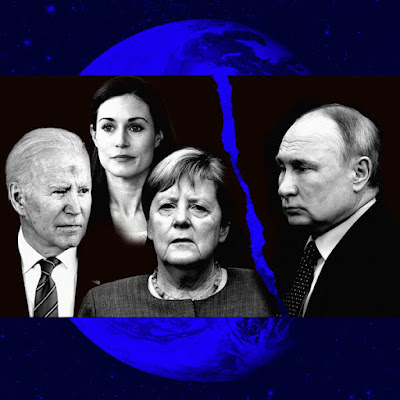
Another New York Times "Debatable" newsletter in my inbox...Again it's about #PutinsWar in the #Ukraine.Today it's about the effectiveness of sanctions in the light of an important sector not yet been shut. The complete stop of oil and gas imports from Russia remains for a majority of observers the only way to keep Putin at bay, - beside the No Flight Zone as Ukrainian's most urgent demand to keep the Russians out of their sky, which has been refused out of fear to enter WWIII and to risk the use of nuclear weapons.

But how is it possible to become independent from Russia's oil and gas in the first place? How long will it take? How many other dependencies will be created? And above all, which consequences will the transition of becoming less dependent have for our climate?


NYTimes.com/Opinion

March 16, 2022


  Illustration by The New York Times; Photography by Sean Gallup, Johanna Geron, Scott Olson, and Mikhail Klimentyev, via Getty Images


By Spencer Bokat-Lindell

Staff Editor, Opinion

At the end of February, the Intergovernmental Panel on Climate Change, a body of experts convened by the United Nations, released a scientific report warning that the dangers of global warming are mounting so rapidly that adapting to them could soon become impossible. “Delay,” the U.N. secretary general said of the findings, “means death.”

The report came out just days after President Vladimir Putin of Russia began his assault on Ukraine, so the world’s attention was understandably trained elsewhere. But soon enough, commentators began pointing out the role that Russia’s fossil fuel trade has played in underwriting the invasion, thrusting climate change and its causes back into the spotlight.

“The world is paying Russia $700 million a day for oil and $400 million for natural gas,” Oleg Ustenko, an economic adviser to the Ukrainian president, Volodymyr Zelensky, told The New Yorker this month. “You are paying all this money to a murderous leader who is still killing people in my country.”

How is the war in Ukraine shaping the politics of fossil fuel dependency, and how might the conflict advance or hobble the global effort to reduce greenhouse gas emissions? Here’s what people are saying.

This is a fossil fuel war’

One of the largest producers of fossil fuels in the world, Russia is highly dependent on its energy trade, with fossil fuels accounting for almost half of its exports and 28 percent of its federal budget in 2020.

Unlike the United States, the European Union has not banned imports of Russian oil and gas, and it’s no secret why: Europe relies on Russia for about one-third of its oil and 40 percent of its natural gas. (The United States, by contrast, gets none of its natural gas and only about 3 percent of the oil it consumes from Russia.)

Germany is especially dependent on Russian fossil fuels; it is Europe’s largest energy consumer and Russia’s most important customer. That dependence deepened after the Fukushima nuclear disaster, in 2011, when Angela Merkel committed to closing all of Germany’s nuclear plants. (The powerful earthquake that struck the same region of Japan on Wednesday was significantly less violent than the one that caused the 2011 disaster and does not appear to have damaged the country’s nuclear plants, even as it left two million homes without power.) Russia now supplies more than half of Germany’s gas, half of its coal and about a third of its oil, according to Bloomberg.

Until recently, German leaders didn’t see this dependency as a problem. As Alec McGillis explains in The New Yorker, Germany actually chose to rely on Russia “because it saw the economic links created by fuel imports — physical links, in the form of pipelines through Eastern Europe and under the Baltic Sea — as integral to keeping peace and integrating Russia into the rest of Europe.”

The big picture: In the view of Svitlana Krakovska, Ukraine’s leading climate scientist, who helped finalize the I.P.C.C. report from Kyiv as Russia invaded, the war on her home country is inextricably linked to climate change. “Burning oil, gas and coal is causing warming and impacts we need to adapt to,” she told The Guardian. “And Russia sells these resources and uses the money to buy weapons. Other countries are dependent upon these fossil fuels; they don’t make themselves free of them. This is a fossil fuel war. It’s clear we cannot continue to live this way. It will destroy our civilization.”

How the war could spur climate action

In the immediate term, Germany and others could take measures to reduce their consumption of Russian fossil fuels, as the Times columnist Paul Krugman explains. Eliminating their use, though, would incur steep costs to the German people equivalent to those of a moderate recession.

“It’s not so simple to just say, ‘OK, overnight, now we’re going to suddenly switch and no longer going to be dependent on natural gas from Russia,’ or fossil fuels in general,” Pete Ogden, vice president for energy, climate and the environment at the U.N. Foundation, told Yahoo News. “Right now, you’re seeing that vulnerability exposed and there not being easy, short-term fixes to that problem.”

But it’s evident that the fusion of foreign-policy and climate interests has lent more political momentum to decarbonization. Germany, for its part, just earmarked 200 billion euros for investment in renewable energy production between now and 2026. “Many of the strategies to lower dependency on Russia are the same as the policy measures you want to take to lower emissions,” Thijs Van de Graaf, a professor of international politics at Ghent University, told The Financial Times. “At the moments where we have these crises, the [energy] transition can be supercharged.”

The European Union has vowed to slash Russian natural gas imports by two-thirds by next winter and to cut them out entirely by 2027. “That would be an extremely ambitious timetable in peacetime, but if the continent shifts to a war footing — as it must, with a savage conflict playing out on its eastern borders — then it should be achievable,” The Boston Globe editorial board writes.

Key to the transition, the board adds, is increasing American production of minerals and metals required for renewable energy technology. Russia is a key supplier of those materials, so the West needs to ensure it doesn’t become just as reliant on Russia for clean energy production as it is now for fossil fuels.

In The Times, Simone Tagliapietra, Georg Zachmann and Morgan Bazilian call for a pact between North America and Europe to help the continent reduce its short-term dependence on Russian fuel. “Such a pact could also build an important foundation for cooperation in clean energy innovation and deployment and reducing energy demand in the longer term — which would significantly enhance Europe’s energy security,” they write.

Four ways the war could derail climate action instead

Fossil fuels — not renewable energy — end up filling the void. As energy prices soar, some fossil fuel executives have seized on the crisis as a business opportunity. At CERAWeek, an annual energy conference that was held in Houston this month, climate change was supposed to feature heavily. Instead, Kate Aronoff reports for The New Republic, the focus shifted to increased domestic fossil fuel production.

“An industry that’s spent the last two years and billions of dollars trying to convince the world that it can ‘decarbonize hydrocarbons’ is much too savvy to brag about all the money to be made off a humanitarian catastrophe,” she writes. “Accordingly, the message fossil fuel execs pivoted to, as Russian troops crept further into Ukraine, is that they’re patriots, standing ready to meet the world’s energy needs and build American ‘energy independence.’”

Countries rethink their priorities. As politicians divert their attention to the invasion, investment in climate mitigation and adaptation could find themselves on the back burner, usurped by the perceived need for greater military spending. And militaries are highly energy-intensive: According to the Watson Institute for International and Public Affairs at Brown University, the Pentagon’s greenhouse gas emissions in 2017 exceeded those of entire industrialized countries, such as Sweden, Denmark and Portugal.

“If war wins, climate action loses,” Andrew Sheng writes for The Jakarta Post. “Increased defense expenditure will accelerate energy and nonrenewable material consumption” as well as push up emissions, “thus diverting scarce resources away from climate action.”

The United States continues to suffer from political gridlock. While the Biden administration has made ambitious promises to transition the country to net-zero emissions by 2050, his climate legislation has been held up for months by members of his own party, and the crisis in Ukraine has done nothing to move that particular needle.

Even Biden himself has been wary of connecting the war in Ukraine to climate change. In his State of the Union address, he made glancing mention of the issue, but “did not articulate the long-term opportunity for the U.S. to lead the world in breaking free of the geopolitical nightmare that is oil dependency,” said Paul Bledsoe, a strategic adviser to the Progressive Policy Institute, a Washington-based think tank.

One explanation for the reticence: During a midterm election year, the administration is worried about being blamed for rising gas prices. Even in deep-blue California, the issue is being treated as a political liability.

Military conflict crowds out cooperation. As my colleague Ezra Klein said on a recent episode of his podcast with the economic historian Adam Tooze, the goal of global decarbonization can be met only if countries work together. But “the hotter conflict gets, the harder cooperation gets,” he noted.

It bodes ill, then, that Russia, as one of the world’s largest producers of fossil fuels, is vital to the international effort to eliminate greenhouse gas emissions, and has so far shown a “critically insufficient” commitment to that, according to Climate Action Tracker. If climate diplomacy was halting during peacetime, what chance is there for it now?

Tooze, however, was more optimistic than Klein about the prospects for decarbonization in an era of renewed great-power competition. International cooperation is important, but “if you take the climate problem as seriously as I think we have to at this point and as seriously as I think big parts of the leadership in China increasingly are, it’s a national interest issue,” he said. “You do it because you’ve got to do it.”


Related:

- Sanctions, Boycotts, Bans - Cancel culture as reaction to #PutinsWar?/ 09.03.2022

- War / 03.03.2022

- War on the horizon???/04.02.2022 


#PutinsWar